These aren't generic roundups. I started trapping gophers at 15 for $5 a head, and the categories on this page are what I've worked with in the field. Where I list a specific product, it's what I'd buy first based on my experience with that type of gear, not a spec-sheet recommendation. I earn a commission on purchases; brands don't pay for placement. More on my background and how these picks get made.
High-Tension Wire Gopher Traps
These are my first pick on almost every job. High-tension stainless steel wire traps — the Macabee style and the Cinch style — are built for the main tunnel lines where the gopher is actually traveling. You're not hoping the gopher wanders into something. You're cutting off the freeway.
The Bagger's Field Notes
"I've been bagging gophers since I was 15, and the right hardware is only half the battle."
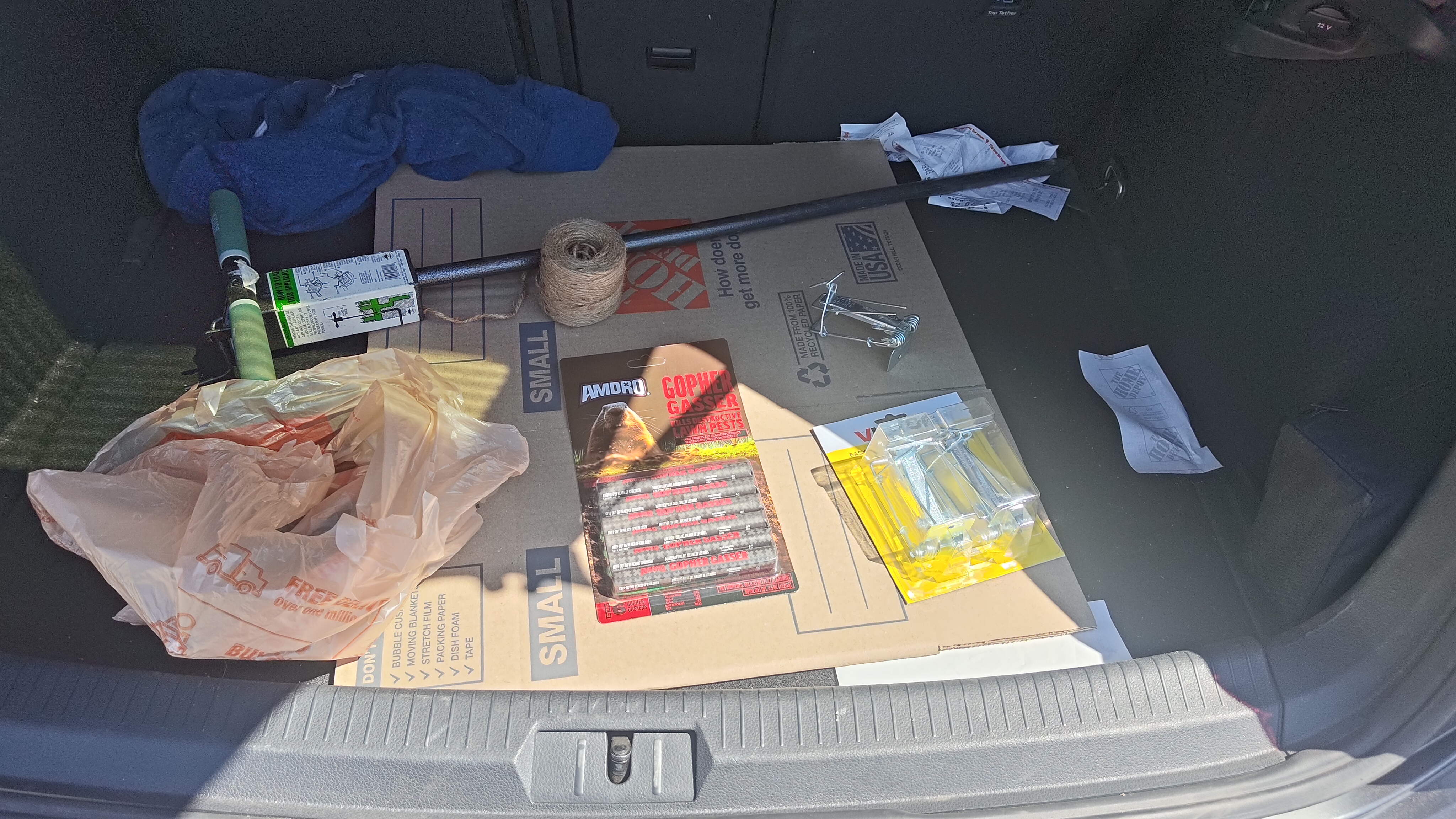
- The Victor Standard: These "Easy Set" style traps are my daily drivers for main tunnel lines.
- Humane Dispatch: If you get a leg-catch, be ready to handle it quickly — I've used a pellet gun in the past to ensure they don't suffer.
- The Peanut Butter Trick: UC Davis studies found no benefit from adding bait to traps — placement and technique are what matter. I still dab a bit behind the trigger plate on most sets anyway; call it habit, not a catch-rate claim.
Our Picks
Victor Easy Set Gopher Trap
The classic Macabee-pattern high-tension wire trap and still the most reliable tool in the kit. Sets fast, fires clean, and holds up to years of daily use.
Best for: Main tunnel intercept on active runs — the go-to for any fresh mound situation.
Shop on Amazon →Cinch Traps (Scissor-Jaw)
A scissor-jaw design that many people find easier to arm and less prone to accidental misfires during placement. Works the same tunnel-intercept principle as the Victor but with a different trigger geometry.
Best for: Beginners, or anyone who finds the Victor wire mechanism fiddly to set consistently.
Shop on Amazon →Quick Comparison
| Product | Price Tier | Best For | Buy |
|---|---|---|---|
| Victor Easy Set Trap | Budget | Daily driver, most reliable catch rate | Shop → |
| Cinch Trap | Mid | Easier arming, fewer accidental misfires | Shop → |
Full technique guides: Victor Trap Guide → · Cinch Trap Guide →
Gopher Gassers & Burrow Fumigation
Fumigation is a supplementary tool, not a primary fix. Gophers can seal off tunnel sections when they detect gas, so results vary — especially with cartridge-style gassers. I've used them when traps aren't producing on a complex system, but I go in knowing they're not guaranteed. Seal every exit hole before you light one, or you're just fumigating your lawn for nothing.
For a full rundown on cartridge gassers — safety, timing, and when they're worth it — see the gasser section of the poison guide.
The Bagger's Field Notes
"Gassers are not a substitute for trapping — they're a supplement for when the tunnel system is too deep or spread out to work efficiently with mechanical sets."
- Seal everything first: Walk the yard and plug every mound opening before you light a gasser. One open exit and you've wasted the fumigation.
- Wet soil helps: After a rain or irrigation cycle, the soil compacts better and holds the gas longer.
- Don't use near occupied structures — CO travels underground and can seep up indoors.
Our Picks
Gopher Gassers (Fumigation Cartridges)
The standard cartridge-style gasser — light the fuse, drop it into the main run, and seal the hole. Results vary: gophers often seal off tunnel sections when they detect smoke or gas, so fumigation cartridges work best as a complement to trapping, not a standalone fix.
Best for: Supplementing trapping on mid-depth systems — use when you've confirmed an active run but traps alone haven't produced results after several days.
Shop on Amazon →Quick Comparison
| Product | Price Tier | Best For | Buy |
|---|---|---|---|
| Gopher Gassers | Budget | Mid-depth systems, quick deployment | Shop → |
Full technique guide: Gopher Gassers (Fumigation Cartridges) →
Probe Tools
Before you set a single trap, you need to find the main tunnel run — and for that, you need a probe. I've been using the same piece of rebar I found on the ground when I was 15. Still use it today. You push it into the soil about 4 to 12 inches from the plug side of the mound, work in a semicircle, and when it drops, you've found the tunnel. That's it.
A plain piece of rebar from any hardware store does exactly the same job. You don't need to buy anything special. But if you want something with a real handle and a better grip — something that doesn't tear up your palm after a long day of probing — there are purpose-built gopher probes made for this exact task. I won't pretend the ergonomics aren't nicer.
The Bagger's Field Notes
"The probe is the most underrated part of the whole system. Get this step right and everything downstream is easier."
- Probe in a semicircle about 4 to 12 inches from the plug side of the mound, not directly under it. The main run is never directly below the mound.
- Feel for the drop — when the probe suddenly sinks 2–4 inches deeper, you've hit the void. That's your set location.
- Hard clay? Wet the area slightly before probing. Dry, compacted soil gives false positives and makes probing exhausting.
Our Picks
Purpose-Built Gopher Probe
Designed specifically for gopher work — a proper handle, calibrated tip, and the right length to reach main tunnel depth without over-penetrating. The ergonomics matter on a long session across a large yard.
Best for: Anyone doing regular gopher work who wants a tool that doesn't tear up their palm over dozens of probe points per session.
Shop on Amazon →Don't have a probe and don't want to buy one? A piece of rebar from any hardware store does the exact same job — that's what I used for years. Already have an underground bait station applicator tube? That works as a probe in a pinch too. Same idea — push it into the soil and feel for the drop.
Quick Comparison
| Product | Price Tier | Best For | Buy |
|---|---|---|---|
| Purpose-Built Probe | Mid | Regular use, ergonomic handle, long sessions | Shop → |
See probing in action: Quick Start Guide — Step 3 →
Gopher Mesh & Hardware Cloth
The spec matters here — go with 1/2-inch galvanized. Smaller mesh restricts root growth and starves your plants; larger mesh lets juveniles squeeze through and defeats the whole purpose. This is a long-lasting barrier for raised beds and planting areas. I've lined dozens of beds with this stuff, and when it's installed right, it's a one-time job. The key installation detail: overlap your seams like roof shingles — water and gophers both find the same gaps.
For a full walkthrough on installation technique, see the Gopher Mesh & Hardware Cloth guide.
Shop Gopher Mesh on Amazon →Full installation guide: Gopher Mesh & Hardware Cloth →
Underground Bait Stations
This is a last resort, not a first move. Diphacinone used to be the common choice here and it's now prohibited for residential use in California, which leaves zinc phosphide where the label lists pocket gophers. On carcass risk zinc phosphide is the lower risk of the two — it isn't stored in the animal's tissue, while anticoagulants persist in the liver. Don't read that as pet-safe. Zinc phosphide is acutely toxic, and a dog that eats the bait — or a freshly killed gopher with bait still in its stomach — can be poisoned. It is the remaining legal option for a California homeowner, not a safe one. I still won't use bait at all on any property where dogs are working. If there's a dog covering that ground, we trap only.
Pet safety: Never place bait stations where dogs, cats, or other animals can access them. Even tamper-resistant stations can be dug up or knocked loose. Keep pets away from treated areas until you've confirmed all stations are secure and accounted for.
For full bait station protocol, see the Underground Bait Stations guide.
Shop Bait Applicator on Amazon →Full technique guide: Underground Bait Stations →
Sonic Repeller Stakes
Start with the research, because it's the part most pages selling these leave out: UC IPM tested this class of device and found that frightening devices such as vibrating stakes "haven't been effective in research trials."
My anecdote, and only an anecdote: I've run sonic stakes in our front yard when gophers were bad, trying to keep them out of a section I'd already cleared while I worked the next section with traps. I was trapping at the same time, so I can't separate what the stakes did from what the traps did — and I'm not going to pretend otherwise.
For placement strategy, see the Sonic Repeller Stakes guide.
Shop Sonic Stakes on Amazon →Full technique guide: Sonic Repeller Stakes →
More Resources
- Browse all gopher control methods
- Victor Trap Tunnel Intercept guide
- Cinch Trap guide
- Carbon Monoxide Burrow Treatment guide
- Gopher Mesh & Hardware Cloth guide
- Underground Bait Stations guide
- Sonic Repeller Stakes guide
- Flooding Tactics guide
- Castor Oil for Gophers — does it work?
- Dog Hunting guide
- Exclusion Fencing guide
- Barn Owl Box guide
- Plants That Repel Gophers — full list
- Hiring a Pro guide
- Quick Start field process
- Best Gopher Traps of 2026 — full roundup with comparisons
- Best Gopher Baits of 2026
- Best Gopher Poison of 2026
- Back to homepage
Frequently Asked Questions
What is the best gopher trap?
Victor-style high-tension wire traps (Macabee pattern) are the most reliable for main tunnel intercept work. They're inexpensive, durable, and work well when placed correctly in the main run.
Do I need bait on a gopher trap?
Bait isn't required — UC Davis studies found no benefit from adding bait to traps; placement and technique are what matter. I still dab a bit of peanut butter behind the trigger plate out of habit, but that's personal preference, not a catch-rate claim.
When should I use gopher gassers instead of traps?
Gassers work best when you can't locate the active run in a deep, branching tunnel network. Seal every exit hole before lighting one, or you'll just fumigate your lawn for no effect. See the gasser section of the poison guide for full instructions.
Do I need a special probe, or can I use rebar?
Rebar from any hardware store does the exact same job as a purpose-built probe. A purpose-built probe just has better ergonomics and handle grip for longer sessions, but the technique is identical.