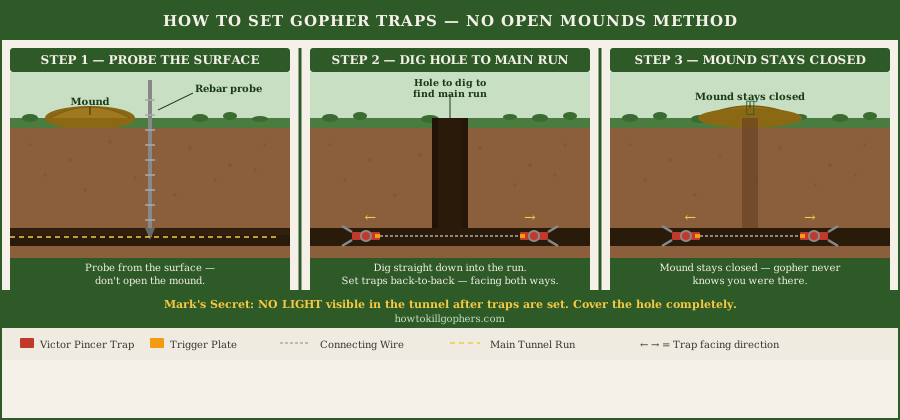
Quick Answer
Victor traps are my go-to — they’re what I started with at 15 and what I still reach for first. Place two traps directly in the main runway facing opposite directions, cover the hole so light doesn’t get in, and check daily. If the run is active you’re often looking at a catch overnight; if nothing’s happened in one to two days, move the trap.
The Gear
- 2 Victor-style gopher traps
- Hand trowel or hori-hori knife
- Gloves
- Flag marker
- Soil to cover opening
Recommended Gear
Victor Easy Set Gopher Trap
High-tension wire trap that fires clean and holds up to years of daily use. The go-to for any main-tunnel set — nothing I've tested beats it for speed and reliability.
Best for: Active main tunnel intercept — place two facing opposite directions for the highest catch rate.
Shop Victor Traps on Amazon →The Process
- Find a fresh mound and use a gopher probe about 4 to 12 inches from the plug side to locate the main tunnel.
- Open the tunnel cleanly and clear enough space so trap jaws move without rubbing dirt.
- Set two traps facing opposite directions in the main run and secure them with wire or cord.
- Cover the opening to block light and airflow while keeping trap triggers unobstructed.
- Check daily; if nothing in 1 to 2 days, move the trap.
Bagger Pro-Tip
Always run two traps back-to-back facing opposite directions. I learned this early on — set one trap and the gopher often feels the disturbance and reverses before hitting it. Set two and there’s nowhere to go. If the tunnel feels like a freeway, you’re in the right spot.
UC IPM research confirms trapping is the most reliable method: “trapping often results in greater control of gophers than baiting,” and UC Davis studies found no benefit from adding bait to traps — placement and technique are what matter. (Source: Baldwin, R.A. — UC IPM, 2025; UC IPM Alfalfa Guidelines, 2016)
Safety Warning
Keep children and pets away from set traps; the spring force can injure fingers, paws, or curious noses.