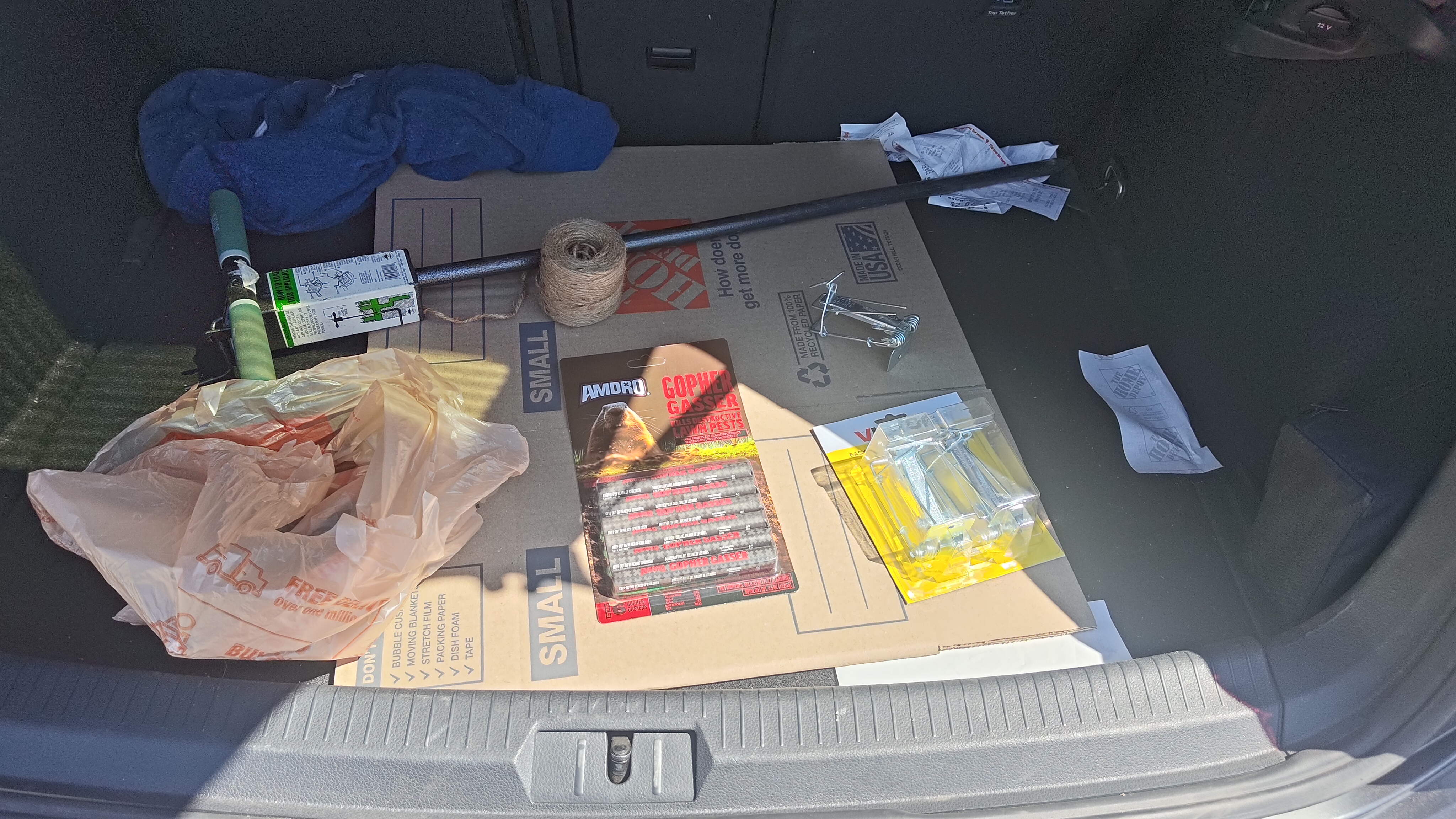
This is the actual process I used with my dog Taco for years — not a cleaned-up version, not generic advice. Every yard is different, but the sequence below works. I still run it in this exact order every time I work a new gopher problem.
Step 1 — Scout the yard
Walk the whole yard first to get a general layout of where gopher activity is. Look for all the mounds before touching anything. Get the full picture first.
Rushing straight to the first mound you see is how you miss the bigger picture. Know your battlefield before you start.
Dog owners: Once you've scouted, open the mound holes so your dog can sniff them and work the surface. Taco would occasionally nail a gopher right at the opening. No dog? Leave the mounds alone and move to Step 2.
Step 2 — Probe for the main run
Use a probe to poke around the area, about 4 to 12 inches from the plug side of the mound in a semicircle pattern. You're feeling for the drop — when the probe suddenly sinks deeper, you've hit the main tunnel run. The main run is never directly under the mound.
Rebar works fine. A purpose-built probe gives you better feedback and saves your wrist on hard ground.
Step 3 — Flush with water (dog owners only)
Only do this step if you have a hunting dog working the yard. The point of flooding is to push gophers toward the surface where the dog can catch them. Taco was the reason we flooded — he'd work the yard while I ran the hose and we'd nail them as they came up.
No dog? Skip this step entirely and go straight to Step 4. You don't need to flood before trapping — and doing it without a dog just warns the gopher and muddies your trap set.
Step 4 — Set traps
Set two steel pinch traps (Victor-style) back-to-back facing opposite directions in the main run. Cover the hole completely — no light in the tunnel. The gopher will come back to repair the damage and hit the trap. That's the whole game.
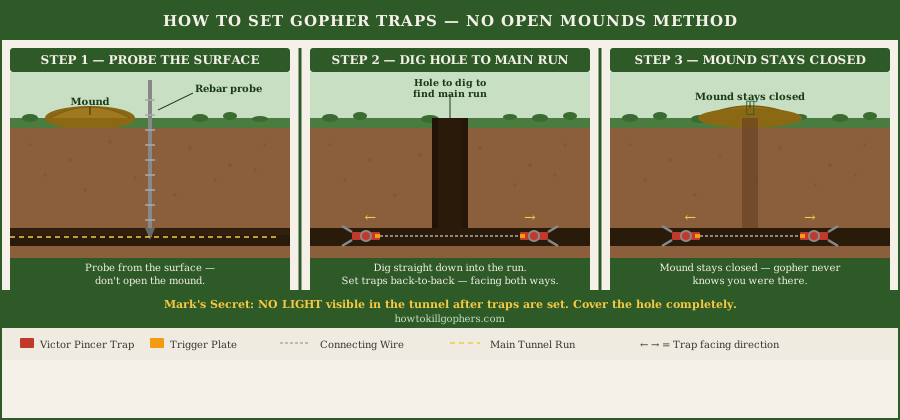
The Secret — No Light in the Tunnel
This is the most important part of the whole process, and most people skip it.
After setting the traps, there must be no visible light coming through the tunnel from the trap opening. Cover the hole completely. Block all light.
Why it works: Gophers feel safe when their tunnel system appears intact and dark. If they see light, they know something is wrong and won't approach. But if the tunnel looks normal and dark, they'll come to investigate and repair the damage from the flooding — and that's when they hit the trap.
Dirt clods, a board, a piece of sod — anything that seals out light. This one step is the difference between a trap that sits there for days doing nothing and one that catches within hours.
Go deeper
More detail on the gear and methods behind this process:
Seen people online recommending coffee grounds or Irish Spring? Here's why that won't cut it — and a rundown of every folk remedy I've tried and watched fail.
Frequently Asked Questions
Why isn't my gopher trap catching anything?
The most common reason is light entering the tunnel from the trap opening. Gophers sense the disruption and won't approach a trap that lets in daylight. Cover the hole completely with a dirt clod, board, or piece of sod — this single step is the difference between a trap that sits for days and one that catches within hours.
How do I find the gopher's main tunnel?
Probe in a semicircle about 4 to 12 inches from the plug side of the mound. When the probe drops suddenly deeper, you've found the main run. The main tunnel is never directly under the mound — it runs alongside it. Rebar works fine for probing; a purpose-built probe just has better ergonomics.
Should I flood the burrow before trapping?
Only if you have a dog working the yard. Flooding pushes gophers toward the surface — useful when a hunting dog is there to catch them. Without a dog, skip it. Go straight to trapping. Either way, the gopher comes back to repair the tunnel and hits the trap.
How many traps should I set at once?
Set two traps back-to-back in the same main run section, facing in opposite directions. Two traps cover both directions of travel and double your chances of a quick catch.