Quick Answer
Look at the mound. If it's a crescent or fan shape with a plugged hole off to one side, you have a gopher. If it's a symmetrical volcano shape with a hole dead center, you have a mole. Get the ID right first — gopher traps don't catch moles, and mole traps don't catch gophers. Treating the wrong animal wastes time and money.
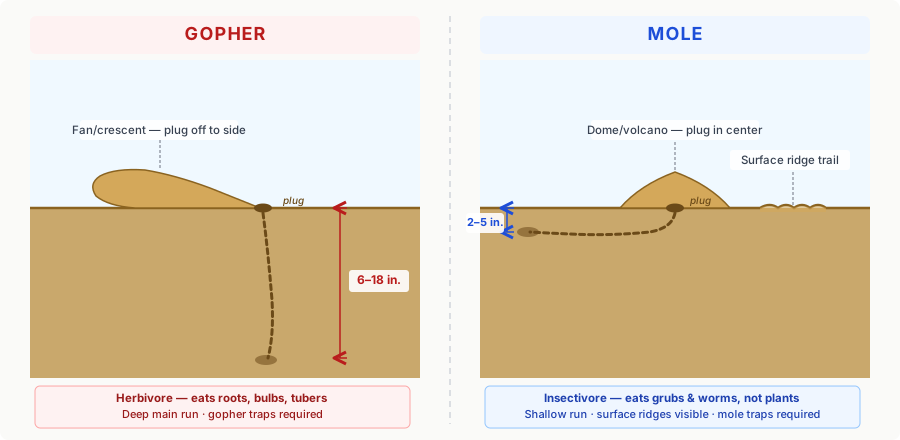
Side-by-Side Comparison
| Feature | Gopher | Mole |
|---|---|---|
| Mound shape | Crescent or fan, plugged hole off to the side | Symmetrical volcano, hole dead center |
| Diet | Roots, bulbs, tubers — pure herbivore | Grubs, worms, insects — never eats plants |
| Tunnel depth | 6–12 inches, deep main runs | 2–5 inches, shallow surface ridges |
| Plant damage | Yes — pulls plants down from below | Rarely — lifts turf but doesn't eat roots |
| Surface ridges | Uncommon | Very common — raised soil trails across lawn |
| Activity season | Year-round | Spring and fall most active |
| Size | 6–8 inches, larger body | 4–7 inches, paddle-shaped front feet |
Mound shapes, tunnel depths, and diet distinctions sourced from: Baldwin, R.A. — UC IPM Pest Notes: Pocket Gophers (UC ANR Pub. 7433, 2025) · Salmon & Lickliter — Wildlife Pest Control around Gardens and Homes (UC ANR Pub. 21385)
Why Getting the ID Right Matters
Gophers and moles cause completely different types of damage and require completely different treatment. A gopher is an herbivore — it's actively eating your plants, bulbs, and roots. A mole is an insectivore — it's hunting grubs and worms underground and the surface damage is just collateral from tunneling.
If you set gopher bait in a mole tunnel, nothing happens. The mole won't touch it. If you set a surface mole trap over a deep gopher run, you'll never get a catch. Misidentifying the pest is a common reason people spend weeks "treating" a problem with no results.
How To ID Yours — Step by Step
- Find a fresh mound — fresh means damp soil pushed up within the last 24–48 hours.
- Check the shape. Get down and look at it from the side. Fan/crescent with a plugged hole off center = gopher. Dome/volcano with a center plug = mole.
- Look for surface ridges. If you see raised trails of soil running across your lawn between mounds, that's a mole's shallow feeding tunnel. Gophers don't leave surface trails.
- Check your plants. Pull up a plant near the damage zone. If the roots are chewed off or the whole plant pulls out easily with no roots attached, that's a gopher. If the roots are intact but the plant is just heaved up from below, that's mole tunneling.
- Probe for tunnel depth. Use a rod or screwdriver. Gopher main runs are 6–12 inches down. Mole feeding tunnels are only 2–5 inches — you'll hit the void almost immediately.
The Bagger's Field Notes
"Nine out of ten people who tell me they have gophers actually have gophers. But the ones who are wrong are always wrong the same way — they see raised ridges in the lawn and assume gopher. That's a mole every time. Gophers work deep. If you can feel a tunnel ridge with your foot, you've got moles."
What To Do Next
You have a gopher
Start with mechanical trapping — it's the most reliable method.
Cinch Trap Guide Victor Trap GuideYou have a mole
Moles need surface or shallow tunnel traps — the scissor-jaw or harpoon style.
Shop Mole Traps on AmazonFrequently Asked Questions
How do I identify a gopher mound?
Look for a crescent or fan-shaped mound with a plugged hole off to one side — that's a gopher. A symmetrical volcano shape with a hole dead center is a mole. Get this right before treating anything, since gopher and mole traps are not interchangeable.
What is the difference between a gopher and a mole?
Gophers are herbivores that eat roots, bulbs, and tubers — they actively destroy plants from below. Moles are insectivores that hunt grubs and worms; they cause surface tunnel ridges but don't eat your plants. Setting gopher bait in a mole tunnel does nothing.
How deep do gophers dig compared to moles?
Gopher main runs go 6–12 inches deep. Mole feeding tunnels are only 2–5 inches below the surface — you can often feel the raised ridges through the ground with your foot. Probe depth is a reliable way to confirm which animal you have.
Why are there raised ridges running across my lawn?
Raised surface ridges are mole feeding tunnels, not gopher tunnels. Gophers work deep and never leave surface trails. If you can feel a tunnel ridge underfoot, it's a mole every time.